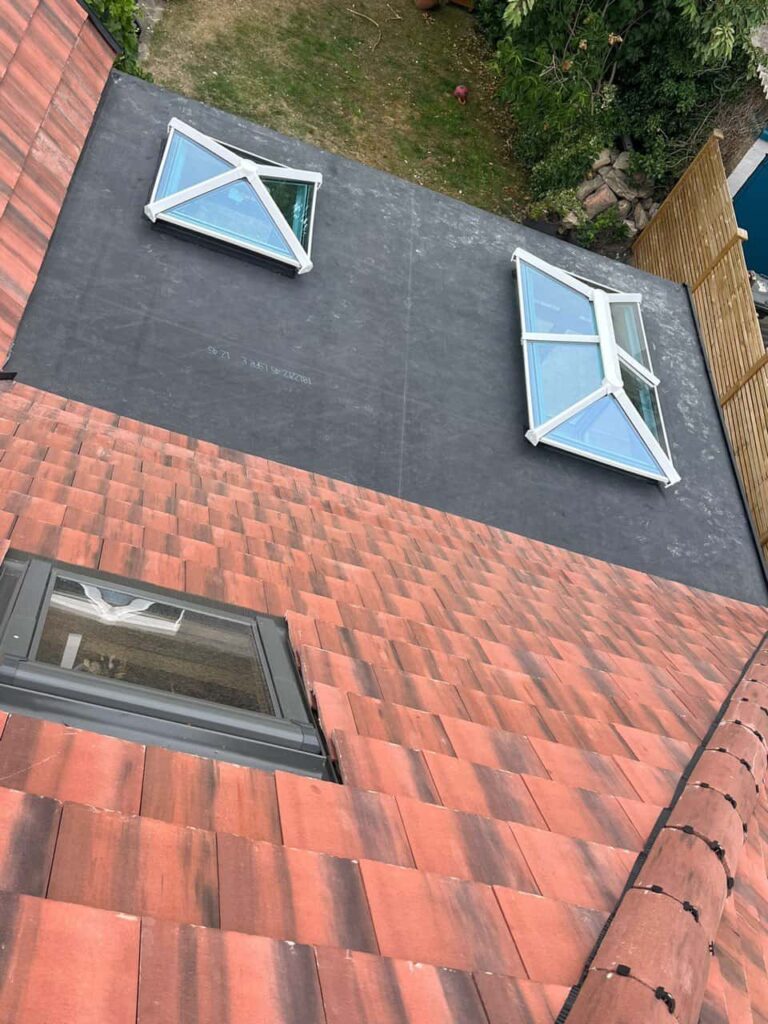
Roof repairs are a normal part of maintaining a property. A slipped tile, damaged flashing or isolated leak can often be corrected effectively without needing extensive roofing work. However, there can come a point when repeated repairs indicate that the roof itself is experiencing wider deterioration.
There is no fixed number of repairs that automatically means a roof should be replaced. What matters is how frequently problems are occurring, whether they are developing in different areas, and the overall condition of the roofing system. For homeowners in Harefield, Greater London, LS Roofing Harefield can assess whether further repairs remain appropriate or whether an ageing roof would benefit from a more comprehensive solution.
There Is No Magic Number of Roof Repairs
Five repairs on one roof could mean something very different from five repairs on another.
For example, several minor repairs carried out over many years on unrelated areas may simply reflect normal maintenance. By contrast, repeated repairs within a relatively short period can suggest that multiple components are reaching the end of their serviceable condition.
The more useful questions are:
- How often are new problems appearing?
- Are repairs occurring in different sections?
- Are previously repaired areas remaining sound?
- Are the tiles or slates deteriorating generally?
- Are leaks becoming more frequent?
- What condition are the underlying materials in?
Looking at the pattern of repairs provides a much better indication of roof condition than simply counting them.
1. New Problems Keep Appearing in Different Areas
One of the clearest signs that repairs may be becoming excessive is when defects repeatedly develop across different sections of the roof.
A tile may be replaced on one slope, followed later by flashing repairs elsewhere. Another leak might then appear around a separate roof junction.
Each repair could be perfectly successful in isolation, but the continuing appearance of unrelated problems may indicate widespread ageing.
At this stage, assessing the complete roof becomes increasingly important.
2. Tiles Are Regularly Slipping or Breaking
Repeated tile problems can indicate broader deterioration
Replacing an individual damaged tile is a routine roof repair when the surrounding covering remains sound.
If tiles regularly become loose, cracked or displaced, however, the problem may extend beyond individual tiles.
Possible causes include:
- General deterioration of the roof covering
- Ageing fixings
- Problems with supporting components
- Movement within sections of the roof
- Widespread weathering
Continually replacing individual tiles without investigating why they keep failing may only address the immediate symptoms.
3. Roof Leaks Continue to Return
A properly diagnosed localised leak can often be repaired successfully. Concern increases when water ingress repeatedly develops from different areas.
An ageing roof can have several vulnerable points at once, including:
- Damaged roof coverings
- Worn flashing
- Deteriorated valleys
- Ageing underlay
- Ridge or verge defects
- Vulnerable roof junctions
If leaks continue despite previous repairs, the complete roofing system should be assessed rather than simply concentrating on the latest damp patch.
4. The Roof Has Become a Patchwork of Repairs
Good-quality repairs can extend the useful life of a roof considerably. Over many years, however, repeated localised work can leave different sections of roofing at very different stages of their lifespan.
There may be newer tiles beside heavily weathered originals, repaired flashing alongside older junctions, and several areas that have received attention at different times.
Eventually, maintaining consistent performance across such a roof can become increasingly difficult.
A roof does not fail because it has been repaired before. The concern is whether the remaining original materials are continuing to deteriorate around those repairs.
5. Problems Return Soon After Other Areas Are Repaired
The frequency of repairs matters
The time between repairs can provide useful information about the condition of a roof.
An isolated repair followed by years of dependable performance is very different from a roof requiring attention every few months.
When new defects begin appearing soon after previous work, it can indicate that deterioration is no longer confined to one section.
This is particularly important with older roofs where several components may be ageing at approximately the same time.
6. Hidden Roofing Components Are Deteriorating
The visible tiles or slates are only one part of the roofing system.
Beneath them are components such as underlay and battens that also contribute to the roof’s performance. These materials can deteriorate over time and are not always fully accessible during small localised repairs.
If widespread problems exist beneath the covering, continually repairing individual tiles above may not provide a complete solution.
Re-roofing allows the covering to be removed so underlying components can be properly assessed and renewed where necessary.
7. Repairs Are Becoming More Extensive
Another useful warning sign is a change in the scale of work being required.
Earlier repairs may have involved replacing one or two tiles, while later problems begin involving larger sections of roofing, several junctions or more extensive water ingress.
This progression can indicate that the roof is moving from isolated defects towards more general deterioration.
Professional assessment can establish whether further targeted repairs remain sensible or whether complete replacement should now be considered.
When Do Roof Repairs Still Make Sense?
An older roof does not automatically need replacing
Repeated repairs do not always mean a roof has reached the end of its useful life.
Repair can remain entirely appropriate when:
- Damage is clearly localised
- The surrounding roof remains sound
- Previous repairs are performing correctly
- The underlying components remain serviceable
- There is no widespread deterioration
- The cause of the problem can be identified and corrected
The objective should always be to carry out the level of work the roof genuinely requires.
When Should Roof Replacement Be Considered?
Complete replacement becomes more relevant when defects are widespread and the roof can no longer be maintained effectively through isolated work.
Signs that replacement may deserve consideration include:
- Frequent new repairs
- Recurring leaks in different locations
- Numerous damaged or unstable tiles
- Extensive deterioration beneath the roof covering
- Several roofing components failing together
- Increasingly widespread weathering
Replacement allows the roofing system to be addressed comprehensively rather than continuing to respond to individual failures as they appear.
Why Repeated Repairs Do Not Necessarily Mean Previous Work Has Failed
This is an important distinction.
If one section of an ageing roof is repaired correctly and another unrelated section later develops a problem, this does not mean the original repair was unsuccessful.
It may simply mean that the surrounding roof is continuing to age.
This is why professional roofers consider the condition of the entire roofing system. The question is not only whether the latest defect can be repaired, but whether the remaining roof is likely to continue providing dependable protection.
Why Identifying the Root Cause Matters
Repeatedly treating visible symptoms can result in the same type of problem continuing.
For example, replacing a slipped tile is appropriate if the tile itself was the problem. If several tiles are moving because their supporting components have deteriorated, however, replacing them individually may not address the underlying cause.
A professional assessment should therefore establish:
- What has failed
- Why it has failed
- Whether surrounding materials are affected
- Whether the problem is isolated or widespread
Correct diagnosis is one of the most important aspects of effective roof repair.
Professional Assessment Can Prevent Unnecessary Work
A homeowner faced with repeated roofing problems may assume that complete replacement is automatically necessary. Equally, continuing with individual repairs indefinitely may not always be appropriate.
A thorough roof inspection provides a clearer basis for deciding between the two.
At LS Roofing Harefield, we assess the condition of the roof covering, previous repairs, vulnerable junctions and signs of wider deterioration before recommending suitable work.
Where a repair remains the right solution, there is no reason to replace an otherwise serviceable roof. Where deterioration has become widespread, a more comprehensive approach can provide greater long-term reliability.
Professional Roof Repairs in Harefield
LS Roofing Harefield provides professional roofing services throughout Harefield, Greater London. Whether a property requires an isolated roof repair or assessment of an ageing roof with recurring problems, our focus is on identifying the underlying cause and recommending the appropriate solution.
By considering the complete condition of the roofing system rather than treating each defect in isolation, we can help homeowners make informed decisions about maintaining reliable protection for their property.
Conclusion
There is no specific number of roof repairs that can be considered “too many”. The real warning sign is a pattern of increasingly frequent problems, particularly when leaks, damaged tiles and other defects begin appearing across different sections of the roof.
Occasional localised repairs can keep a sound roof performing effectively for many years. When deterioration becomes widespread, however, continuing to repair one problem after another may no longer address the overall condition of the roofing system.
If your roof in Harefield, Greater London seems to require increasingly frequent attention, contact LS Roofing Harefield. We can assess its condition and determine whether another professional repair is appropriate or whether a more comprehensive roofing solution would provide better long-term protection.
Call us on: 01895 546 498
Click here to find out more about LS Roofing Harefield
Click here to complete our contact form and see how we can help with your roofing needs.