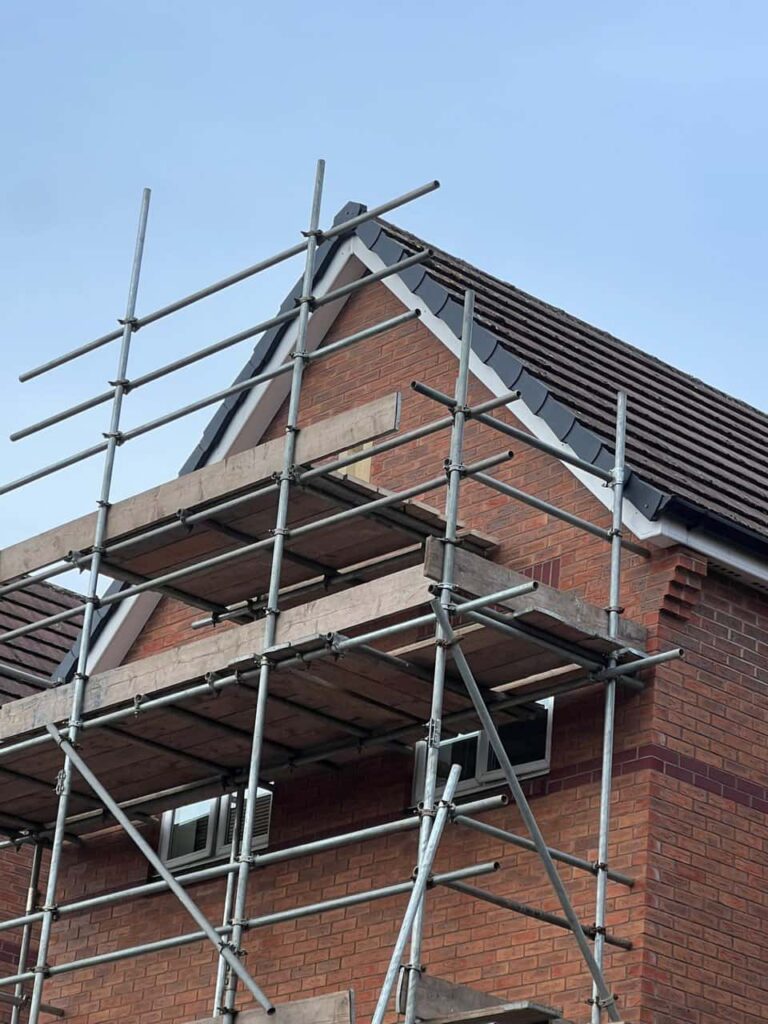
Strong winds and stormy weather can place considerable pressure on a roof. While major damage may be immediately noticeable, other problems can be much less obvious. A tile may have shifted without falling, flashing may have become loose, or a previously minor weakness may have developed into an opening that allows water beneath the roof covering.
The absence of an obvious leak does not necessarily mean that the roof has come through severe weather completely unaffected. Some defects only become apparent during subsequent rainfall, while others gradually worsen through continued exposure.
For homeowners in Harefield, Greater London, knowing what changes to look for after strong winds can help identify roofing problems at an earlier stage. Checks should always be made safely from ground level or from inside the property, with closer roof inspection left to roofing professionals.
What Are the Most Common Signs of Roof Damage After Strong Winds?
Wind can affect different roofing components in different ways. The most obvious problems include missing tiles or slates, but damage can also occur around ridges, verges, flashing and other exposed details.
It is also important to consider how the roof has changed rather than looking only for dramatic damage. A small difference in alignment, a new damp patch or roofing material found on the ground can all provide useful evidence that something requires attention.
Missing Roof Tiles Are an Obvious Warning Sign
A missing tile leaves a section of the roofing system more exposed than intended.
Depending on the construction beneath it, rainfall may be able to reach the underlay and surrounding materials. Further wind can also affect neighbouring tiles once the normal overlapping arrangement has been disturbed.
From ground level, it may be possible to see a clear gap or an area where the roof covering looks different from the surrounding slope.
Missing tiles should be assessed rather than waiting for an internal leak to confirm that a problem exists.
Slipped Tiles Can Be Less Noticeable
A roof tile does not have to fall completely to become a problem.
Strong winds can sometimes move a tile from its normal position while leaving it on the roof. From below, this may appear as an uneven line, an unusual gap or a tile sitting lower than neighbouring materials.
Even relatively small displacement can interfere with the overlapping arrangement designed to shed rainfall.
A slipped tile should therefore not be dismissed simply because it remains attached to the roof.
Slates Can Become Displaced During Poor Weather
Slate roofing can experience similar problems.
An individual slate may slip, crack or become detached, leaving the surrounding section less protected. Pieces of slate found around the property after strong winds can provide an indication that the roof should be checked.
The wider area matters as well.
If several slates have moved or the surrounding covering appears uneven, there may be a broader issue with that particular section rather than one isolated failure.
Cracked Tiles May Remain in Position
Not all storm damage involves visible displacement.
A tile can remain in approximately its original position while developing a crack or break. Depending on where the damage occurs, this may affect its ability to direct rainfall effectively.
Cracking can be difficult to identify safely from ground level.
If there are other indications of roof disturbance after a storm, professional inspection can help determine whether materials that appear to remain in position have actually been damaged.
Check the Ground for Fallen Roofing Material
One useful check does not require looking at the roof at all.
After strong winds, inspect accessible ground around the property for pieces of tile, slate, mortar or other roofing material.
Finding debris does not always make its original location immediately obvious, but it can indicate that something has changed above.
Any fallen roofing material should provide a reason to have the roof assessed, particularly if the source cannot be identified safely from ground level.
Ridge Damage Can Leave an Exposed Part of the Roof Vulnerable
The ridge runs along one of the most exposed parts of many roofs.
Strong winds can place considerable pressure on ridge components. Movement, deterioration or displacement in this area can affect the weather resistance of the roof and potentially influence surrounding materials.
Changes may include visible gaps, missing sections or material found below after the storm.
Because of the ridge’s exposed position, defects should be assessed promptly rather than left to further weathering.
Verge Areas Can Be Particularly Exposed to Wind
The edges of a roof can experience substantial wind pressure.
Where verge materials become loose or deteriorated, strong winds may expose existing weaknesses and cause sections to move further.
From ground level, homeowners may notice changes in alignment or missing material around the roof edge.
A damaged verge can affect more than appearance. Its condition forms part of the roof’s overall weather-resistant detailing and should be considered alongside the adjacent covering.
Flashing Can Become Loose or Displaced
Flashing protects important roof junctions.
Storm conditions can expose existing weaknesses or cause already deteriorating flashing to move. Once the detail is no longer performing correctly, rainfall may find a route behind surrounding materials.
Flashing problems can be particularly difficult for homeowners to diagnose because the resulting internal dampness may appear some distance from the actual entry point.
If a leak develops after strong winds, roof junctions should form part of the investigation.
Valleys Should Be Checked for Storm-Related Problems
Roof valleys carry rainfall from adjoining slopes and therefore need to remain clear and weather resistant.
Stormy conditions can introduce debris into these areas or reveal deterioration that was previously less noticeable.
A problem within a valley can become particularly apparent during heavy rainfall because significant amounts of water are being directed through the same route.
Recurring dampness following a storm may therefore require assessment of valleys as well as the main roof covering.
Wind Can Expose Problems Around Roof Junctions
Where roof sections meet, the materials need to work together to prevent water ingress.
Strong winds can drive rainfall towards these details from angles that do not occur during calmer conditions. An existing weakness may therefore become noticeable for the first time during a storm.
If water ingress occurs only during wind-driven rain, this information can be particularly useful during diagnosis.
The visible internal symptom may not sit directly below the external defect, so the complete relevant roof section needs to be considered.
Look for New Damp Patches Indoors
Internal checks can provide important evidence after poor weather.
New staining on ceilings or upper walls can indicate that moisture has entered the building. Existing marks that suddenly become damp again are also significant.
The size of the stain does not necessarily indicate the size of the external roofing defect.
A relatively small opening can allow water to travel beneath the roof covering before becoming visible inside, meaning the true source needs to be identified rather than simply concentrating on the stained area.
Existing Damp Stains Can Become Active Again
An old ceiling stain may have remained dry for a long period before becoming noticeable again following a storm.
This can indicate that the affected roofing area is still vulnerable under particular weather conditions.
It does not automatically mean that exactly the same defect has returned. A nearby component may have deteriorated or wind-driven rain may be entering through another route.
Recurring moisture should therefore be investigated according to the roof’s current condition.
Water Ingress May Not Appear Immediately
Storm damage and visible leakage do not always occur at exactly the same time.
A roofing component can become displaced during strong winds but remain temporarily capable of limiting water ingress. Later rainfall may then reveal the weakness.
This delay can make it easy to overlook the connection between the storm and the eventual dampness.
If a leak appears shortly after a period of strong winds, recent roof disturbance should form part of the assessment.
Check Accessible Roof Spaces for Changes
Where a roof space can be accessed safely from inside the property, it may be possible to notice signs of water ingress that have not yet reached finished ceilings.
Damp areas, water marks or other recent changes can provide useful information.
Homeowners should avoid moving through areas that are not designed for safe access and should not attempt to investigate external roof defects themselves.
The purpose of an internal observation is simply to identify whether anything appears different following the storm.
Strong Winds Can Expose Existing Weaknesses
Not every defect discovered after a storm was necessarily created entirely by that weather event.
A tile fixing may already have been weakened. Mortar may have been deteriorating, or flashing could have been gradually becoming less secure.
Strong winds can expose these vulnerabilities by placing additional demands on roofing components.
This distinction matters because repairing only the material that finally moved may not always address the reason that section was vulnerable in the first place.
One Missing Tile Can Sometimes Indicate a Wider Problem
A single missing tile may genuinely be an isolated defect.
However, the surrounding roof should still be considered.
If neighbouring tiles have also moved, fixings are no longer dependable or several materials show signs of disturbance, replacing one missing component may not be sufficient.
Professional assessment helps determine whether the storm affected one localised point or a broader section of the covering.
Several Displaced Materials Deserve Closer Investigation
Finding several missing or slipped tiles after strong winds changes the picture.
Multiple failures can suggest that a wider area was affected by wind pressure or that existing deterioration had already reduced the stability of the covering.
The condition of neighbouring materials and their supporting components should therefore be examined.
The aim is to restore the complete affected area rather than repeatedly dealing with individual materials as they become displaced.
Previous Repair Areas Can Be Worth Checking
Sections that have received previous roofing work should not automatically be assumed to be vulnerable.
A correctly completed repair can continue performing reliably through demanding weather.
However, where storm damage develops close to an older repair, both the repair and surrounding original materials should be considered. The actual defect may involve either area.
This avoids automatically blaming previous work when another component has subsequently deteriorated.
Storm Damage Can Affect More Than the Roof Covering
Tiles and slates are the most visible parts of many roofs, but they are not the only components that matter.
Ridges, verges, flashing, junctions and underlying materials all contribute to weather protection.
If external covering materials have been substantially displaced, the condition beneath them may also require assessment.
Repair work should therefore be based on the complete affected section rather than simply restoring its appearance from outside.
Why You Should Not Climb Onto the Roof to Check for Damage
After a storm, a damaged roof can be particularly unsuitable for homeowner inspection.
Materials that appear secure may have moved, and surfaces can be slippery. Loose components can also behave unpredictably when disturbed.
Checks should therefore remain at ground level and within safely accessible internal areas.
Binoculars or photographs taken from a safe position may help identify visible changes, but a closer external inspection should be carried out using appropriate professional access methods.
What Should You Look for From Ground Level?
After strong winds or stormy weather, useful warning signs include:
- missing or visibly slipped tiles
- displaced or missing slates
- uneven sections of roof covering
- damaged ridge or verge areas
- loose-looking flashing
- roofing fragments on the ground
- new internal damp patches
- existing stains becoming wet again
- visible changes around roof junctions
- several materials appearing to have moved
- signs of water ingress following subsequent rainfall
None of these observations require climbing onto the roof.
If something appears different, a professional inspection can establish the extent and cause of the problem.
Not Every Storm Requires Roof Repairs
Strong winds do not automatically mean that a roof has been damaged.
A roof in sound condition may continue performing normally without requiring any work. The purpose of checking afterwards is simply to identify changes that could otherwise remain unnoticed.
If there are no visible signs of disturbance, no fallen roofing material and no evidence of water ingress, there may be nothing requiring immediate attention.
Professional assessment becomes valuable when there is a genuine indication that the roof’s condition has changed.
Early Inspection Can Keep Repairs Focused
When storm damage is genuinely localised, identifying it promptly can help keep the required work focused on the affected section.
A displaced tile or small flashing defect may be repairable while surrounding roofing remains serviceable.
Leaving an opening exposed to repeated rainfall can allow a relatively contained problem to influence a wider area.
Early diagnosis therefore helps determine what actually requires attention before additional deterioration complicates the original defect.
Professional Assessment Identifies More Than Visible Damage
The most obvious missing tile is not always the complete problem.
At LS Roofing Harefield, storm-related roof assessment can consider the visible damage alongside surrounding tiles or slates, ridges, verges, flashing, junctions and signs of water ingress.
This helps establish whether the damage is genuinely isolated or whether strong winds have exposed a wider weakness.
For homeowners in Harefield, Greater London, this provides a clearer basis for carrying out appropriate repairs without unnecessarily disturbing roof areas that remain sound.
The Cause Should Guide the Repair
Effective storm damage repair should restore the roof’s performance rather than simply make the damaged section look complete again.
If one tile has moved because of an isolated issue, a local repair may be appropriate. If several surrounding components have become unstable, the repair may need to consider the wider section.
Likewise, an internal leak should be traced to its actual external source rather than assuming the defect is directly above the damp patch.
Understanding the cause helps ensure that the work addresses the problem the roof genuinely has.
Conclusion
After strong winds or a storm, homeowners should look for changes such as missing or slipped tiles, displaced slates, damaged ridge or verge areas, loose flashing, roofing debris on the ground and new signs of water ingress inside the property. Some storm-related defects are immediately obvious, while others only become noticeable during later rainfall.
Checks should always be made safely from ground level or from accessible internal areas rather than by climbing onto the roof. The important question is not simply whether something looks damaged, but whether the storm has affected one isolated component or exposed a wider roofing weakness.
If you have noticed signs of roof damage following strong winds at your property in Harefield, Greater London, contact LS Roofing Harefield. We can assess the affected area, identify the extent of the damage and recommend an appropriate repair based on the actual condition of the roof.
Call us on: 01895 546 498
Click here to find out more about LS Roofing Harefield
Click here to complete our contact form and see how we can help with your roofing needs.